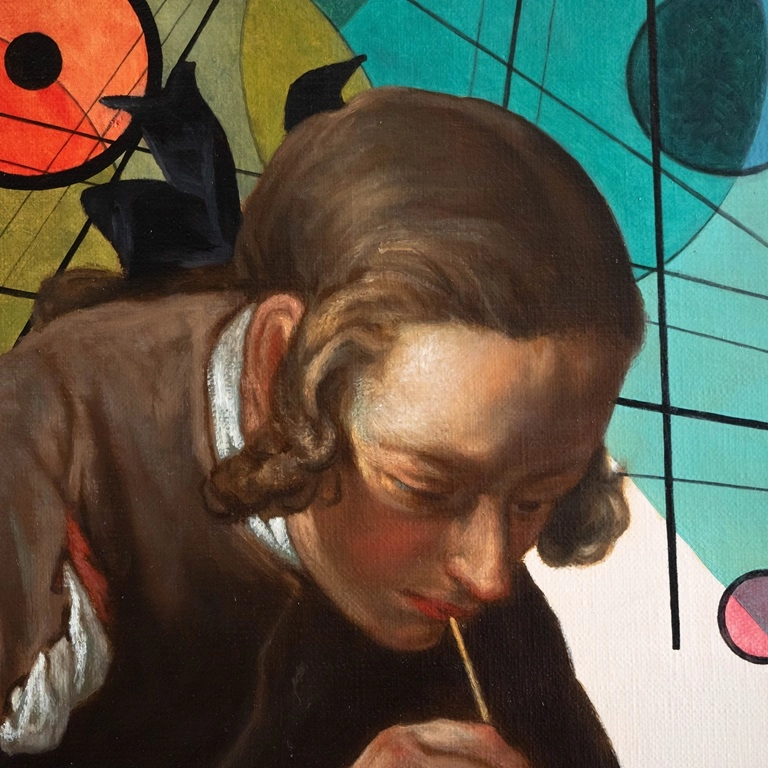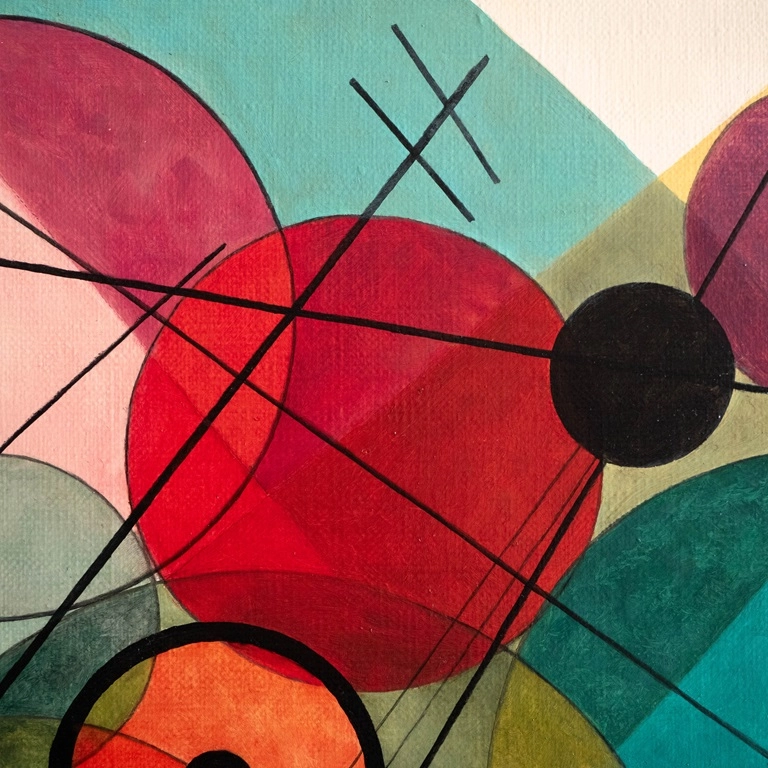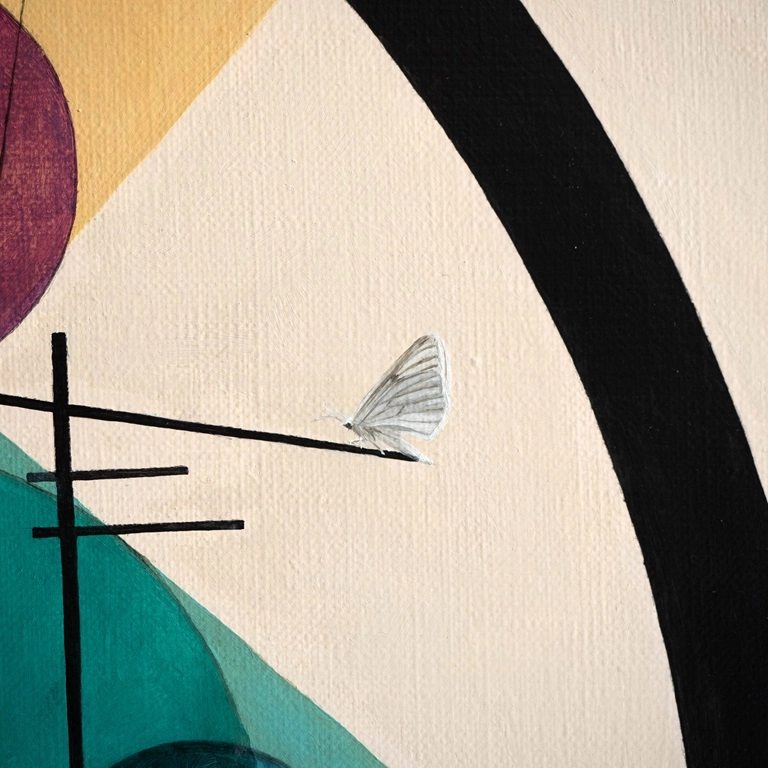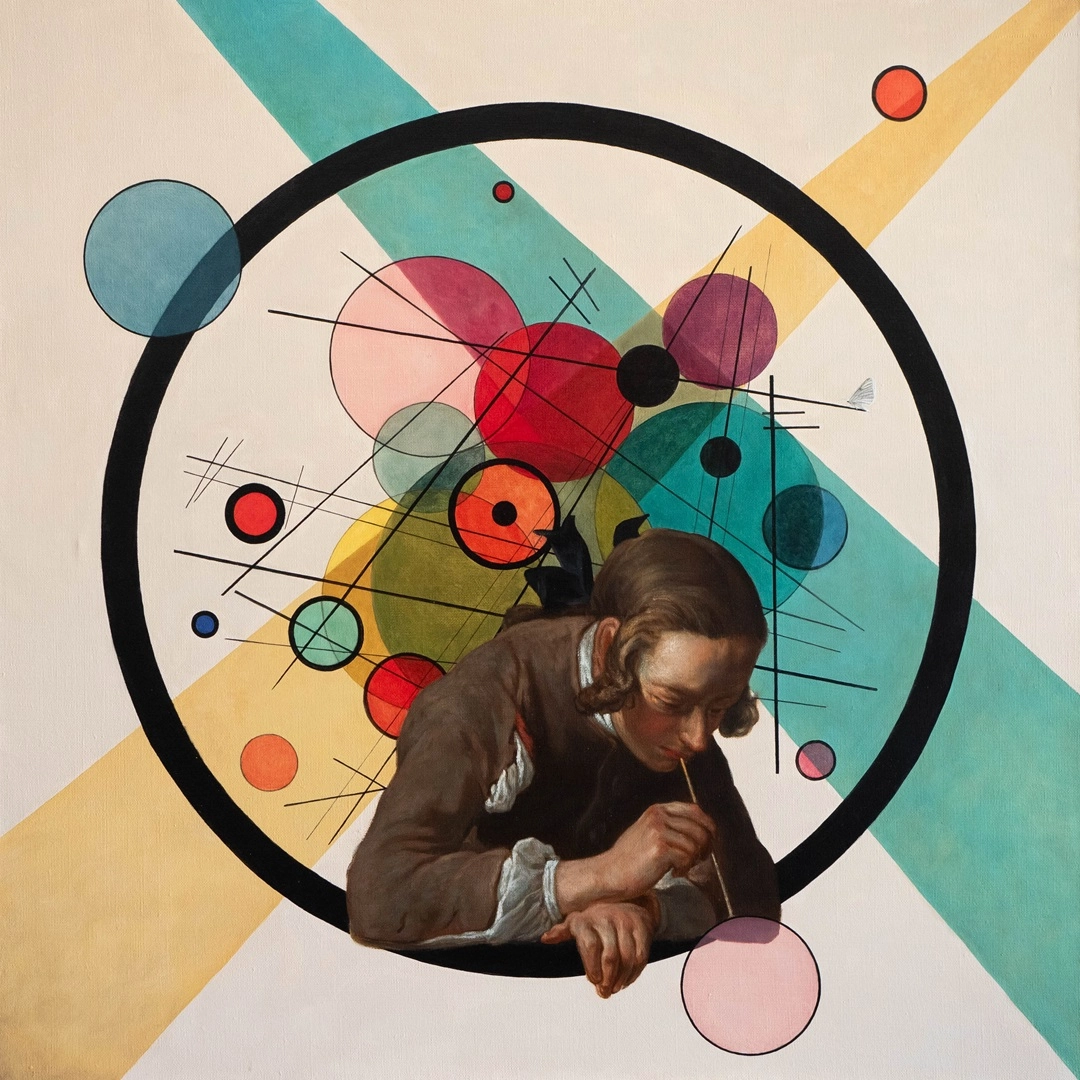
The starting point for the painting “Bubbles” was a painting titled “Circles in a Circle” by Wassily Kandinsky, one of the first abstract artists. This work incorporates the figure of a young man blowing a soap bubble from a painting by Jean Chardin, a French painter of the 18th century.
As Kandinsky wrote: “Painting is a thundering conflict of different worlds, which in and out of the battle with one another are intended to create the new world, which is called the world of art. Each work arises technically in a way similar to that in which the cosmos arose – through catastrophes, which from the chaotic roaring of the instruments finally create a symphony, the music of the spheres. The creation of the work is the creation of worlds.”
Therefore, by introducing new elements into the harmony created by Kandinsky, the world order was disturbed and it must be reconstituted, like a cosmos in which new, previously unknown objects appeared.
The bubble motif has been associated with the passing of time since ancient times. In painting, it has become one of the vanity symbols, pointing to the fragility of human life. In the images of children enjoying this innocent play, it reminds us of the fleeting nature of this youthful, carefree period. You can also treat this symbol a bit more broadly, to look at the transience of not only what is human. Art also passes away. And not only in its physical form, which also accepts the signs of the times, but also in trends, issues, fashions, techniques, and the role it plays in the contemporary world.
The abstractions created by Kandinsky were groundbreaking, original and even shocking at the time of their creation. Today they are perceived completely differently. Kandinsky, however, treated art in a deeply spiritual way. He believed that an artist’s role is to lead others to the top. Therefore, it is not about what is transient, but the most important thing is to discover what will not burst as easily as a soap bubble.